
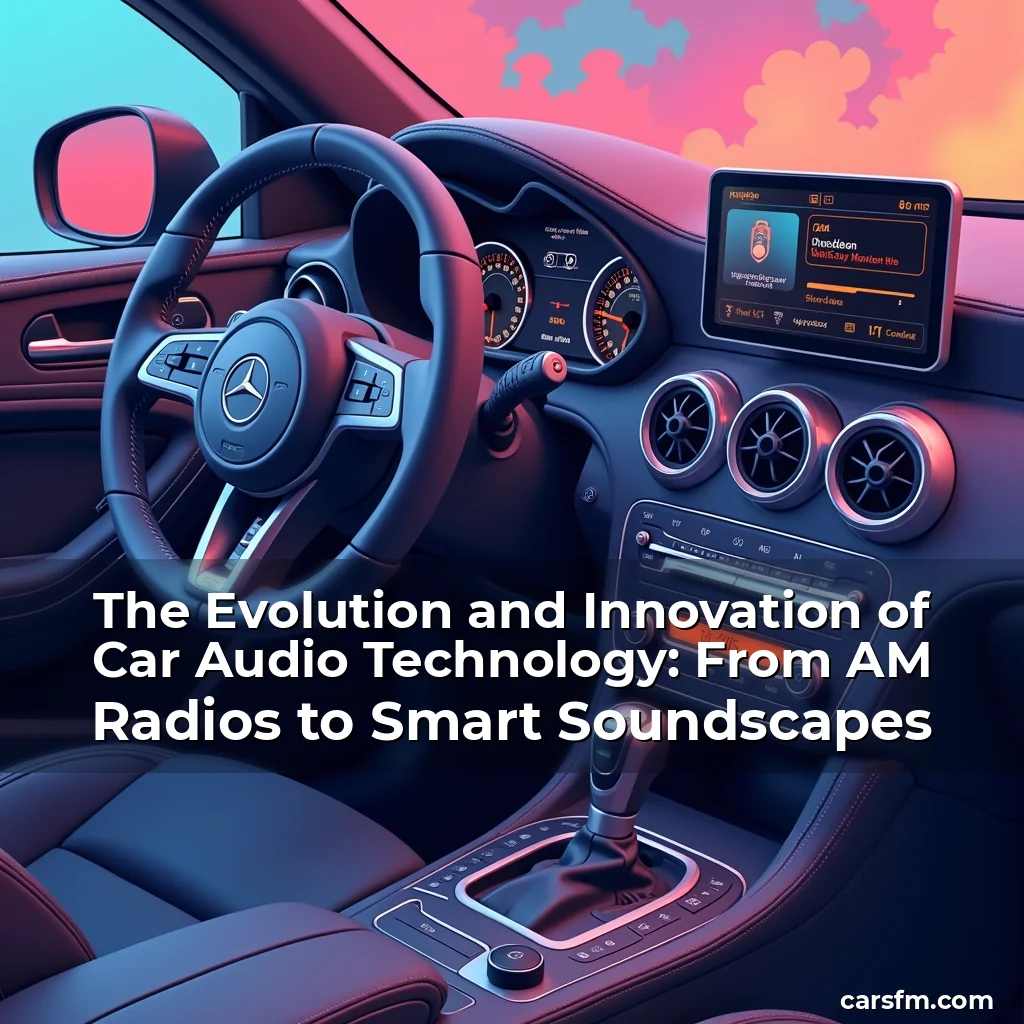
The Evolution and Innovation of Car Audio Technology: From AM Radios to Smart Soundscapes
The Evolution and Innovation of Car Audio Technology: From AM Radios to Smart Soundscapes
In an age where every aspect of our lives is intertwined with digital innovation, car audio systems have undergone a remarkable transformation. What was once limited to basic AM/FM radios has now evolved into sophisticated sound experiences powered by artificial intelligence, high-fidelity speakers, and seamless connectivity.
This evolution reflects not only advancements in engineering but also changing consumer expectations. Modern drivers demand immersive entertainment that rivals home theater quality while ensuring safety through voice control and hands-free operation.
The Genesis of Automotive Sound Systems
Car audio began its journey in the early 20th century when manufacturers started integrating simple radio receivers into vehicles. These rudimentary systems provided access to live broadcasts, offering passengers something beyond the mechanical hum of engines.
By the 1930s, companies like Zenith and RCA developed portable radio units specifically designed for automotive use. This period marked the beginning of dedicated car audio products, setting the stage for future innovations.
The post-war era saw significant improvements in both signal reception and speaker design. Engineers worked tirelessly to reduce interference from engine noise and enhance clarity across different frequencies.
Cassette players emerged as the dominant format during the 1960s and 1970s, allowing listeners to create personalized playlists rather than relying solely on broadcast stations. This shift revolutionized how people consumed music while driving.
Key milestones:
- 1920s: First installation of car radios by Ford and Chrysler, transforming road trips into shared listening experiences
- 1948: Introduction of the first transistor-based car radio by Philco, dramatically improving durability and efficiency
- 1960s: Cassette decks became standard equipment in many models, enabling users to record their favorite songs
- 1980s: CD players replaced cassettes, offering superior sound quality and eliminating tape wear issues
Modern Innovations Shaping Today’s In-Car Entertainment
Contemporary car audio systems integrate cutting-edge technologies such as Bluetooth, Wi-Fi, and USB ports to support diverse media formats. These features enable seamless streaming services integration and direct phone connections without compromising sound fidelity.
Voice recognition software plays a pivotal role in modern infotainment systems. By allowing drivers to issue commands related to volume adjustment, song selection, or navigation, these interfaces promote safer driving practices.
High-resolution audio capabilities are becoming increasingly common among luxury vehicle brands. With bitrates up to 192kHz/24-bit, consumers can enjoy studio-quality recordings right within their vehicles.
Spatial audio technologies like Dolby Atmos and DTS:X provide three-dimensional sound fields that envelop listeners regardless of seating position inside the cabin. Such implementations require specialized speaker arrangements including overhead channels.
Adaptive sound tuning algorithms continuously analyze environmental factors – ambient noise levels, speed, and road conditions – adjusting equalizer settings automatically to maintain optimal listening comfort at all times.
Digital Signal Processing (DSP) Revolutionizing Audio Quality
DSP technology enables precise manipulation of audio signals before they reach the speakers. Through advanced filtering techniques, engineers can correct frequency imbalances caused by physical constraints within confined spaces like automobiles.
Multi-channel DSP processors allow independent calibration of each speaker zone within the vehicle interior. This means front seats receive slightly different acoustic treatments compared to rear occupants based on distance measurements and room acoustics modeling.
Benefits include:
- Improved stereo imaging accuracy by compensating for driver positioning variations
- Better bass response management using subwoofer phase alignment tools
- Reduced distortion effects resulting from poor speaker placement decisions made during manufacturing phases
Some premium systems even offer user-adjustable presets that let owners fine-tune their preferred listening experience according to personal tastes or seasonal changes affecting external noise profiles.
As semiconductor technology advances further, we’re seeing smaller yet more powerful DSP chips being incorporated into mainstream models. This trend promises continued enhancements in overall sonic performance across various price points.
Integration of Artificial Intelligence in Car Sound Systems
Artificial intelligence has begun reshaping how we interact with车载 audio environments. Machine learning algorithms help predict user preferences based on past behavior patterns, suggesting new tracks or artists they might appreciate next.
Smart assistants embedded within head units learn contextual cues from conversations between driver and passenger. For instance, if someone mentions wanting classical music after discussing work stress, AI could recommend appropriate genres accordingly.
Real-time language processing allows natural conversation flow between human occupants and virtual agents managing multimedia functions. Users don’t need memorize specific command structures anymore; instead, they simply speak naturally as usual.
Predictive analytics applied to traffic data helps optimize playback schedules so that commuters never miss out on favorite programs due to unexpected delays along regular routes.
With ongoing research focusing on emotional detection via vocal tone analysis, future iterations may tailor music selections dynamically depending upon current mood states identified through subtle speech characteristics alone.
Wireless Connectivity Solutions Transforming In-Vehicle Experiences
Bluetooth technology remains central to wireless communication between mobile devices and car stereos today. However, newer standards like Bluetooth Low Energy (BLE) promise extended battery life without sacrificing connection stability.
Wi-Fi enabled dashboards open doors towards cloud-based storage solutions where entire music libraries reside remotely rather than taking up internal memory space unnecessarily. Streaming becomes instantaneous thanks to high-speed internet access wherever available.
Apple CarPlay and Android Auto represent major breakthroughs in cross-platform compatibility. They essentially mirror smartphone UI onto larger screens making familiar apps easily accessible through touch gestures or spoken instructions alike.
Advancements in NFC pairing simplify initial setup procedures significantly. Drivers merely tap phones against designated areas within interiors triggering automatic synchronization processes instantly.
Future developments aim at achieving true universal interoperability amongst competing platforms thus ensuring consistent functionality irrespective of brand loyalty choices made by individual users.
Speaker Technologies Redefining Sound Reproduction Capabilities
Traditional cone-shaped woofers continue dominating low-frequency reproduction tasks despite recent attempts at alternative designs incorporating piezoelectric materials capable of generating vibrations efficiently albeit with limitations regarding dynamic range expansion potential.
Titanium dome tweeters excel at handling high-pitched sounds cleanly without distorting delicate nuances present in orchestral compositions or jazz improvisations recorded professionally elsewhere outside vehicular contexts.
Emerging trends show increased adoption rates around:
- Magnetic levitation speaker systems which eliminate frictional losses associated conventional magnet assemblies thereby enhancing transient responses crucial for accurate musical note articulation purposes
- Electrostatic transducers utilizing charged diaphragms suspended between oppositely polarized plates creating highly responsive yet fragile components suitable mainly niche applications demanding extreme precision requirements
- Nanocomposite material usage aiming at reducing weight burdens while maintaining structural integrity necessary sustaining prolonged periods continuous operation under varying climatic conditions encountered regularly during travel sessions
Active matrix array configurations employing numerous small drivers working collaboratively produce wider dispersion angles benefiting all passengers simultaneously regardless spatial distribution differences observed typically found within typical automobile cabins occupied by multiple individuals concurrently engaged auditory activities together.
Ongoing experimentation focuses heavily upon optimizing crossover networks responsible directing appropriate frequency ranges correctly assigned respective drivers ensuring minimal phase shifts detrimental preserving original waveform shapes essential delivering faithful reproductions source material intended heard accurately without perceptible alterations introduced erroneously through improper implementation stages occurring during production cycles.
Evolving Standards Around Audio File Formats & Compression Techniques
From MP3 compression schemes initially popularized late 1990s onwards leading widespread acceptance lossy encoding methods prioritizing file size reduction over absolute fidelity preservation until emergence higher resolution alternatives gained traction gradually thereafter.
FLAC (Free Lossless Audio Codec) stands out notable exception retaining full original information captured recording sessions without discarding any data whatsoever providing audiophiles opportunity experiencing pristine versions digitally stored archives without degradation artifacts commonly associated inferior formats.
Comparative advantages worth noting:
- MP3 offers convenience portability benefits compact storage consumption ideal fitting large collections constrained limited capacity hard drives frequently utilized portable gadgets carried daily routines
- AAC provides better compression ratios compared MP3 particularly beneficial video files containing synchronized audio tracks requiring efficient bandwidth utilization scenarios online streaming services
- ALAC Apple Lossless Audio Codec maintains compatibility ecosystem surrounding iOS devices ensuring smooth transitions switching between compressed decompressed states seamlessly without noticeable disruptions usability
Recent advancements toward object-based audio encoding approaches exemplified Dolby Atmos format introduce multidimensional layering possibilities permitting individual elements within complex mixes moved freely virtual three dimensional space independently from fixed positional assignments previously dictated linear channel allocations traditional surround sound methodologies employed historically.
Such innovations necessitate corresponding upgrades hardware infrastructure supporting decoding operations required realizing intended spatial effects effectively translating conceptual visions actual audible realities experienced end users situated physical locations inside vehicles equipped necessary facilities executing computations demanded rendering processes accurately.
Safety Considerations Influencing Design Choices Within Automotive Sound Engineering
Regulatory bodies impose strict guidelines governing permissible noise levels inside moving vehicles primarily aimed protecting hearing health occupants exposed prolonged exposure elevated decibel counts potentially damaging sensitive ear tissues over time spans measured years.
Engineers employ active noise cancellation mechanisms strategically placed throughout interiors counteract unwanted vibrations generated mechanical components operating continuously underneath floorboards beneath feet passengers seated lower portions chassis structures.
Strategies adopted industry professionals ensure compliance mandates:
- Implementing directional speaker arrays focusing sound waves forward direction minimizing side wall reflections contributing background ambience perceived occupants
- Utilizing acoustic insulation materials lining door panels roof ceilings preventing excessive reverberation amplifying loudness perception artificially inflating apparent volumes actually produced sources
- Integrating volume limiters restricting peak output thresholds below hazardous levels defined legal statutes safeguarding public welfare interests
Additionally, designers consider ergonomics aspects placing controls intuitively reachable fingers avoiding distractions prompting unnecessary glances away roads ahead critical moments requiring heightened situational awareness.
Biometric sensors integrated steering wheels detect fatigue indicators adjust audio alerts appropriately reminding tired drivers take scheduled rest breaks preventing accidents attributed drowsiness incidents reported annually worldwide transportation authorities monitoring incident reports.
Futuristic Visions Shaping Next Generation Car Audio Technologies
Looking ahead, several groundbreaking ideas currently under development poised redefine what possible expect regarding audio experiences delivered within motor vehicles soon coming years.
Holographic display systems project visual representations alongside accompanying audio streams immersing viewers fully simulated environments created digital renderings replicating real-world scenes precisely matched temporal synchronizations ensuring perfect alignment between optical auditory stimuli received simultaneously.
Neural interface technologies explore possibility connecting brainwave activity directly audio output devices bypassing conventional input methods altogether enabling thought-controlled music selections intuitive adjustments parameters without needing manual interactions through buttons touchscreen displays traditionally relied upon.
Quantum computing principles begin influencing algorithmic optimizations involved signal processing tasks performed onboard computers facilitating faster calculations executed parallel threads improving latency reductions critical achieving near-instantaneous responsiveness demands modern interactive applications consuming substantial computational resources.
These emerging paradigms suggest profound transformations awaiting enthusiasts seeking latest technological marvels integrated upcoming generations smart automobiles redefining boundaries between mobility recreation entertainment sectors converging harmoniously create holistic user experiences surpassing previous limitations imposed separate domains operating independently prior advancements achieved through incremental progressions witnessed historical trajectory outlined earlier sections.
Conclusion
The journey of car audio technology showcases humanity’s relentless pursuit of excellence in merging functionality with enjoyment. As we’ve explored, from humble beginnings with AM radios to today’s intelligent, interconnected systems, the evolution has been nothing short of revolutionary.
To stay at the forefront of this exciting field, embrace new technologies as they emerge and prioritize systems that balance innovation with practicality. Whether you’re upgrading your current setup or investing in a new vehicle, choose options that align with your lifestyle and elevate your driving experience.